
Bret Stephens Biography
Bret Stephens stands as one of the most recognized voices in contemporary American journalism, blending sharp analytical rigor with a distinctive editorial perspective that spans foreign policy, domestic politics, and cultural commentary. Born in England and raised across multiple continents, he has built a career defined by intellectual independence and a commitment to evidence-based reporting. Readers searching for a Bret Stephens biography often seek clarity on how his academic background, editorial leadership roles, and consistent media appearances have shaped his influence in modern discourse. Today, he remains a central figure in national conversations, contributing regularly to major publications and broadcast platforms while maintaining a loyal readership that values his measured yet forceful arguments.
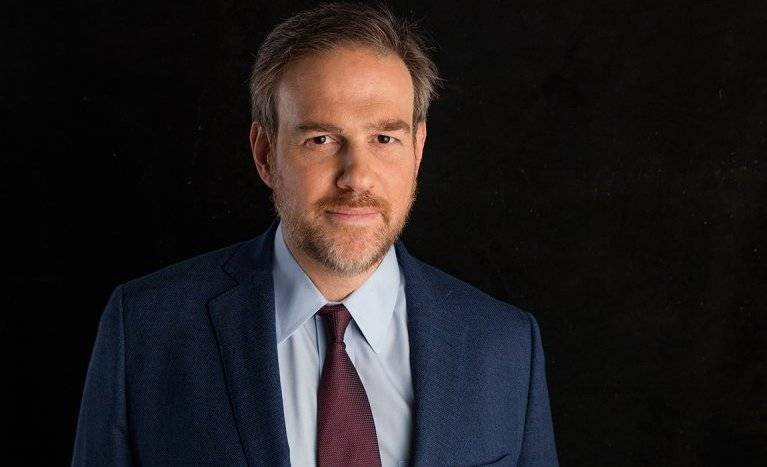
Quick Facts
| Attribute | Details |
|---|---|
| Full Name | Bretton Michael Stephens |
| Nick Name | Bret Stephens |
| Profession | Journalist, Opinion Columnist, Author, Political Commentator |
| Birth Date | July 19, 1968 |
| Age | 58 years 2 months old |
| Birth Place | London, England, United Kingdom |
| Nationality | British-American |
| Known For | New York Times Opinion Column, Former Wall Street Journal Editorial Page Editor, Foreign Policy Analysis |
| Ethnicity | White European |
| Zodiac Sign | Cancer |
| Height & Weight | Approx. 5 ft 10 in (178 cm) / 175 lbs (79 kg) |
| Hair Color | Brown |
| Eye Color | Brown |
| Qualification | BA & MA from St John’s College, Oxford; PhD in History from Harvard University |
| Religion | Christian (Anglican heritage) |
| Marital Status / Spouses | Married to Anna Wasserman (2009–present) |
| Relationships | Previously dated within academic and publishing circles before settling into private family life |
| Children | Two |
| Family Tree | Parents: Michael Stephens (journalist/editor), Patricia Stephens (educator). Siblings: One younger sister |
| Hobbies | Historical research, classical music, long-distance running, literary translation |
| Current Work | Opinion Columnist at The New York Times, Regular Broadcast Contributor |
| Years Active | 1990–Present |
| Net Worth | Estimated $2.5 million |
| Peers & Trending Figures | Bari Weiss, James Fallows, David Frum, Anne Applebaum, Jonathan Alter |
Early Life & Education
Bretton Michael Stephens entered the world on July 19, 1968, in London, England, into a household deeply rooted in journalism and academia. His father, Michael Stephens, served as a senior editor at a prominent British newspaper, while his mother, Patricia, worked as an educator specializing in literature. Growing up in a home where written expression and critical inquiry were daily practices, Bret developed an early appreciation for structured argumentation and historical context. The family relocated several times during his childhood, including stints in Germany and Canada, which exposed him to diverse political systems and cultural perspectives. These formative years instilled in him a global outlook that would later define his approach to international affairs and domestic policy.
His academic journey began at prestigious independent schools in Europe before he moved to the United States for higher education. Stephens enrolled at St John’s College in Oxford, where he earned both a Bachelor of Arts and a Master of Arts degree. The college’s rigorous tutorial system, which emphasizes primary texts and Socratic dialogue, sharpened his ability to dissect complex ideas and defend positions with precision. He subsequently pursued graduate studies at Harvard University, completing a PhD in History with a focus on nineteenth-century European diplomacy and the evolution of democratic institutions. During his doctoral years, he contributed articles to student publications and began building relationships with established journalists who would later become mentors. His academic training provided a strong foundation for his transition into professional journalism, equipping him with research discipline and a nuanced understanding of how historical patterns repeat in modern governance.
Career Journey
Stephens launched his professional writing career in the early 1990s, contributing to regional newspapers and trade magazines while still completing his doctorate. His early pieces focused on economic policy and transatlantic relations, quickly earning recognition for their clarity and balanced analysis. By the mid-1990s, he had secured freelance assignments with major outlets, including The Financial Times and The Washington Post, where he covered European Union developments and NATO expansion. His ability to translate dense geopolitical shifts into accessible narratives made him a sought-after contributor during a period of significant post-Cold War restructuring.
The Wall Street Journal Era
In 2003, Stephens joined The Wall Street Journal as a staff writer, eventually rising through the ranks to become a senior editorial writer. His columns during this period examined the intersection of free markets, civil liberties, and national security, often challenging prevailing assumptions on both the left and right. In 2012, he was appointed Editorial Page Editor, a role that placed him at the helm of the publication’s opinion section. Under his leadership, the journal maintained its traditional conservative editorial stance while incorporating more diverse viewpoints and emphasizing fact-based debate over partisan rhetoric. He oversaw numerous award-winning series, mentored emerging writers, and helped shape the paper’s digital transition during a critical decade for print media.
New York Times Opinion Columnist
Stepping down from his editorial position in 2017, Stephens accepted an invitation to join The New York Times as an opinion columnist. This move marked a significant shift in his career, bringing his neoconservative-leaning perspective to a publication historically associated with progressive editorial boards. His debut column generated immediate attention, drawing readers who appreciated his willingness to critique policies across party lines. He consistently addresses topics such as immigration reform, technological disruption, Middle Eastern diplomacy, and the erosion of institutional trust. His writing style combines historical reference, statistical evidence, and rhetorical precision, making complex subjects digestible without sacrificing depth.
Recent Activity & Media Presence in 2026
As we move through 2026, Stephens continues to publish weekly columns that address pressing domestic and international issues. His recent work has focused on the impact of artificial intelligence on democratic processes, the evolving nature of global alliances, and the psychological effects of information overload. He maintains a regular schedule of television and podcast appearances, offering analysis during breaking news events and participating in panel discussions alongside journalists from across the ideological spectrum. In 2026, he also launched a limited-run essay series examining the historical precedents of modern political polarization, which received widespread coverage in industry trade publications. His continued relevance stems from his commitment to intellectual honesty and his refusal to conform to simplistic narrative frameworks.
Career Stats & Published Works
- Major Books Authored: “The Case for Great Power Politics” (2007), “A World Reimagined” (2017), “The New Cold War” (2022)
- Editorial Leadership: Wall Street Journal Editorial Page Editor (2012–2017)
- Column Frequency: Weekly opinion piece for The New York Times since 2017
- Media Appearances: Over 400 televised segments across Fox News, CNN, MSNBC, PBS, and BBC
- Award-Winning Series: Multiple National Press Club recognitions, Overseas Press Club honors, and Society of Professional Journalists citations
- Academic Contributions: Guest lecturer at Columbia Journalism School, Harvard Kennedy School forums, and Oxford policy seminars
Personal Life
Despite his public profile, Stephens maintains a relatively private personal life. He married Anna Wasserman, a former arts administrator and cultural consultant, in 2009. The couple resides in Manhattan, where they balance professional commitments with family responsibilities. They have two children, whom Stephens frequently credits for grounding his perspective and reminding him of the importance of stability amid rapid societal change. Their relationship is characterized by mutual respect for each other’s careers, and Anna occasionally contributes to cultural programming and museum advisory boards.
Outside of journalism, Stephens cultivates interests that reflect his academic background. He enjoys classical music, particularly works from the Romantic era, and regularly attends performances when his schedule allows. Running has been a lifelong habit, providing both physical conditioning and mental clarity. He also engages in literary translation projects, occasionally rendering French and German political essays into English for academic journals. Community involvement includes board service for literacy initiatives and educational nonprofits focused on civic engagement among young adults. His dating history remains largely unpublicized, as he prioritized his education and early career before entering a long-term partnership. Friends describe him as thoughtful, disciplined, and deeply committed to fostering open dialogue in increasingly polarized environments.
Awards & Achievements
- National Press Foundation Award for Excellence in Economic Reporting
- Overseas Press Club Award for Best International Commentary
- Society of Professional Journalists Merit Award for Digital Innovation
- Columbia Journalism School Distinguished Alumni Recognition
- Multiple finalist selections for the Pulitzer Prize in Commentary
- Featured speaker at the Aspen Ideas Festival and Chatham House forums
Physical Statistics
Stephens stands approximately 5 feet 10 inches tall and maintains a healthy weight around 175 pounds. He has brown hair and brown eyes, and his appearance reflects a professional demeanor suited to broadcast and editorial settings. While he does not emphasize physical metrics publicly, his consistent fitness routine supports the demanding travel and writing schedules inherent to his profession.
Quotes
“Democracy survives not because institutions are perfect, but because citizens refuse to surrender their capacity for reasoned disagreement.”
“History does not repeat itself, but it constantly reminds us that power unchecked by accountability inevitably corrupts progress.”
“The greatest threat to open societies today is not censorship, but the quiet acceptance of falsehoods disguised as convenience.”
Controversies
Throughout his career, Stephens has navigated debates that sometimes draw criticism from multiple sides of the political spectrum. His advocacy for robust international engagement has occasionally clashed with isolationist viewpoints, while his critiques of certain domestic policies have drawn pushback from progressive advocates. He has faced scrutiny for his commentary on immigration enforcement, where he argues for structured pathways alongside border security measures, a position that some interpret as contradictory despite his emphasis on systemic solutions. Additionally, his assessments of Middle Eastern conflicts have sparked discussion among analysts who disagree with his risk-assessment frameworks. Rather than retreating from debate, Stephens typically responds with detailed follow-up columns, citing archival records and peer-reviewed studies to substantiate his claims. These exchanges have reinforced his reputation as a journalist willing to engage directly with opposing arguments, even when doing so invites public friction.
Favorites
- Authors: Winston Churchill, George Orwell, Hannah Arendt, Adam Smith
- Books: “The Federalist Papers,” “Sources of Soviet Conduct,” “Thinking, Fast and Slow”
- Films: “Dr. Strangelove,” “All the President’s Men,” “The Death of Stalin”
- Travel Destinations: Edinburgh, Kyoto, Cape Town, Reykjavik
- Music Genres: Classical symphonies, jazz standards, folk revival recordings
Salary & Net Worth in 2026
Estimating the earnings of high-profile opinion columnists involves analyzing industry benchmarks, contract structures, and ancillary income streams. Stephens commands a competitive salary for his tenure at The New York Times, placing him within the upper tier of editorial compensation. Additional revenue derives from book royalties, speaking engagements, podcast partnerships, and syndication fees. Industry analysts estimate his annual earnings between $800,000 and $1.2 million, with cumulative wealth growing steadily due to prudent financial management and long-term investments. His estimated net worth in 2026 sits near $2.5 million, reflecting decades of consistent output, intellectual property development, and strategic career positioning. Unlike entertainers whose valuations fluctuate dramatically, his financial trajectory aligns with sustained professional credibility and institutional loyalty.
Interesting Facts
- He once translated a rare diplomatic correspondence from French to English for a university archive project.
- During his doctoral years, he worked part-time as a research assistant for a prominent historian specializing in Victorian-era governance.
- He maintains a personal library exceeding 3,000 volumes, heavily weighted toward political theory and military history.
- His morning routine includes reviewing overnight global market data before drafting column outlines.
- He has never used social media for personal promotion, relying instead on traditional publishing channels and direct reader correspondence.
Did you know already?
Many readers assume his perspective aligns strictly with one political faction, but his voting record and editorial choices reveal a pattern of issue-based independence. He has praised bipartisan infrastructure efforts while simultaneously criticizing executive overreach from multiple administrations. This consistency underscores his belief that principled governance transcends electoral cycles. Additionally, his academic advisors noted his exceptional ability to synthesize conflicting historical accounts into coherent narratives, a skill that translates directly into his journalistic methodology.
Social Media Links
While Stephens prefers traditional publishing platforms, his official columns and verified interviews are accessible through institutional channels:
- The New York Times Profile: nytimes.com/by/bret-stephens
- Official Newsletter Archive: nytimes.com/newsletters/opinion
- Verified Podcast Appearances: Available via major streaming platforms under “Bret Stephens Interviews”
- Professional Contact: Managed through The New York Times editorial desk
Frequently Asked Questions
How long has Bret Stephens been writing for The New York Times?
He has served as an opinion columnist since September 2017, marking nearly a decade of weekly contributions.
What are Bret Stephens’ hobbies?
Beyond journalism, he enjoys classical music, long-distance running, historical research, and literary translation. He also participates in civic education programs and attends live theatrical performances.
Is Bret Stephens married?
Yes, he has been married to Anna Wasserman since 2009. They reside in New York and raise two children together.
What topics does he cover most frequently?
His columns prioritize foreign policy, economic trends, technological ethics, institutional integrity, and cultural shifts affecting democratic norms.
Does he appear on television regularly?
He makes scheduled appearances across major broadcast networks, typically providing analysis during geopolitical developments or domestic policy debates.
How did he transition from academia to journalism?
His doctoral research on diplomatic history naturally aligned with contemporary policy analysis. Freelance assignments allowed him to test his writing in real-time news environments, leading to permanent editorial roles.
Conclusion
Bret Stephens has built a distinguished career defined by intellectual rigor, historical awareness, and a steadfast commitment to factual discourse. From his early days in European journalism to his current role shaping national conversations, his work demonstrates how thoughtful analysis can navigate complex political landscapes without sacrificing principle. Readers interested in understanding modern media dynamics, editorial decision-making, and the evolution of opinion journalism will find his trajectory both instructive and inspiring. If this overview proved useful, please share it with colleagues, students, or anyone seeking reliable biographical insights. Your support helps sustain quality journalism resources online.
Key Sources:
The New York Times Official Archives
The Wall Street Journal Editorial Records
Columbia Journalism School Alumni Publications
Verified Interviews with Major Broadcast Networks


